Underpainting, what is it and why do I do it?
You may look at my paintings and wonder, ‘What is that base colour all about?’ or ‘Why does it have pink underneath?’. So, I wanted to spend some time properly explaining UNDERPAINTING as a technique as well as how I use it in my everyday practice.
First, we must understand: What is an underpainting?
An underpainting simply is a layer of paint on the canvas or surface before painting it.
It can be a rendition of the painting, a sketch of the components, their form and composition – this helps an artist establish values (highlights and shadows) early on. A sketch or rendered underpainting will give you an idea of what the painting will look like before going in to add that colour and detail.
Underpainting can also be a flat wash of colour, creating luminosity and unifying colour in a painting. Because light travels through the layers of paint, reflecting the underpainting colour, we are given a glow, adding a radiance which has been admired for centuries by the old masters.
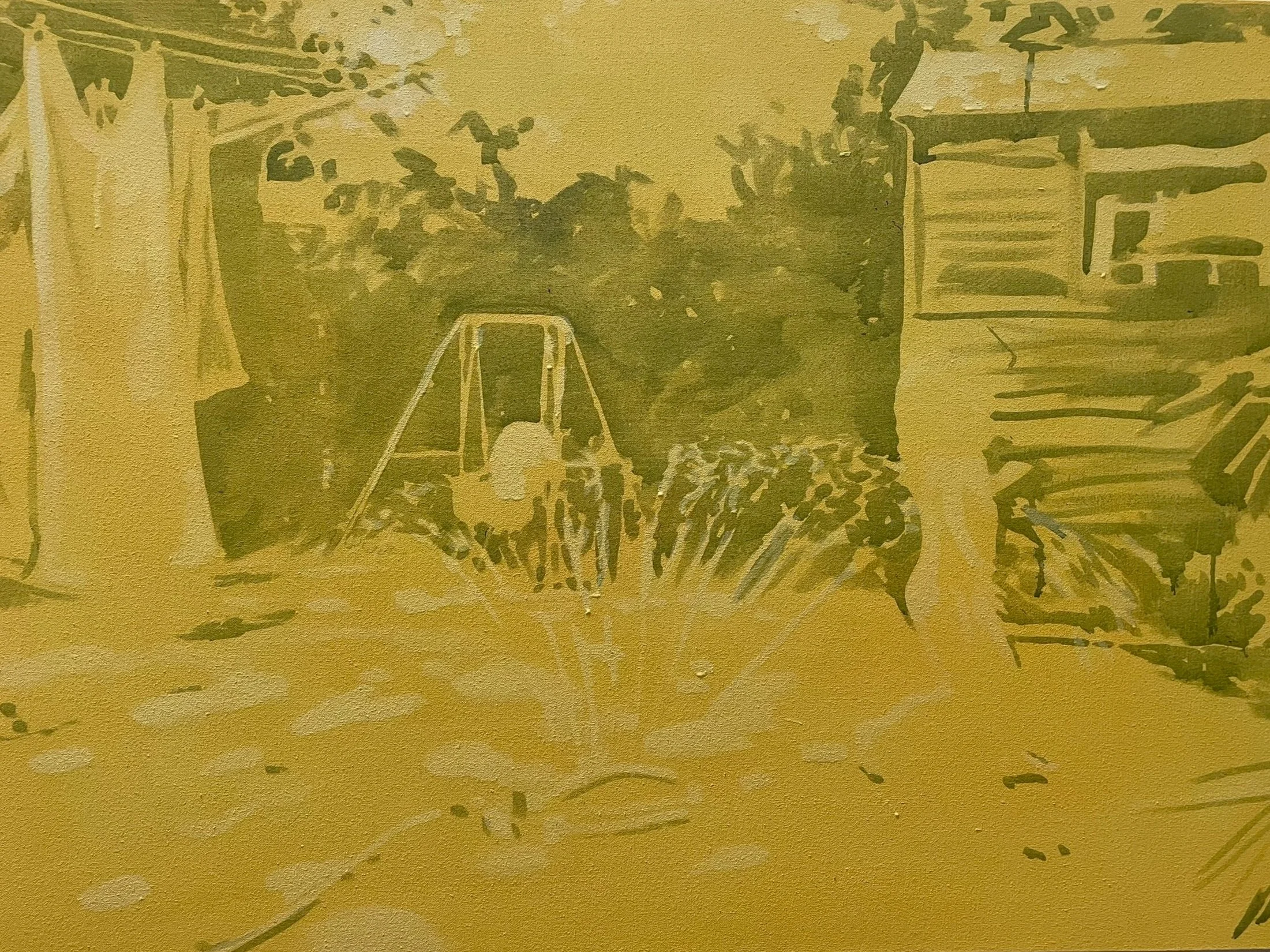
Next, a little history of underpainting:
Underpainting, or ‘dead colouring’ (as it was known), was used by many of the old masters of the renaissance period. Titian, a well-known 16th century Venetian painter was said to be a pioneer in the concept of underpainting. Art historians believe that he used many tones in his underpainting to make his paintings seem more realistic. He often left the edges soft and would cover his underpainting with glazes before building up to more opaque layers. This technique, also used by Leonardo da Vinci, involves sketching the main values to understand structure and form within the later painting.
Ruben used the Italian method, an expansion of Titians technique, which involved applying a pigmented coloured ground to the canvas, before transferring the outline of the image using chalk or crayon to render. Then you would begin an underpainting, thick in some areas and obsolete in others while leaving the colour of the ground still visible. Layers of glaze would be added to build up the layers again.
Over the years the technique has been expanded upon, discovering new ways to underpaint. Many contemporaries, like me, still use the method of underpainting to a certain capacity.
Techniques of underpainting:
There are a few different types of underpaintings, but the one that I like to use and works best for my art is imprimatura. Imprimatura, stemming from the Italian “first paint layer”, is the technique where you have an initial stain of colour on the surface. I personally love this technique of underpainting, because I find it best allows the colour to come through and unify the colour palette. I love exploring negative space within my paintings and so the imprimatura showing in these gaps helps create my native and embodies the boldness of my colour choices.
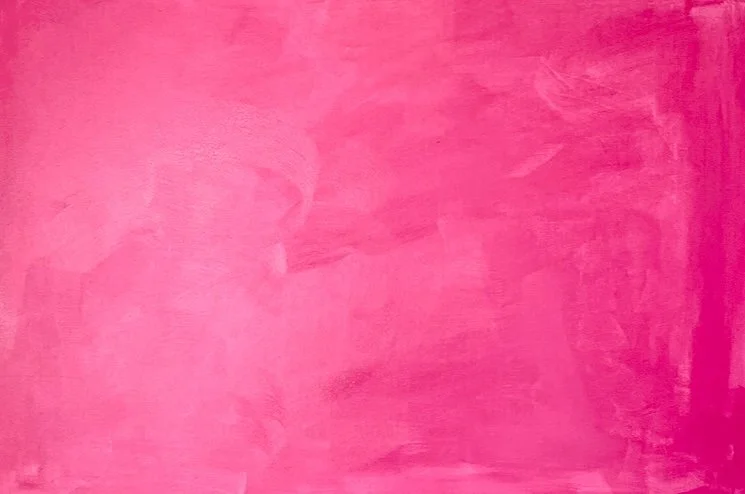
Why do I use an underpainting in my work?
Underpaintings, in a way of laying down the sketch and values is important as it helps me to understand form and composition. It helps iron out any mistakes in input any changes to my initial design ahead of painting. I will use this base sketch to guide me throughout the whole painting process, and I will use the values soi don’t lose depth and dimensions when adding colour. However, the primary reason for my underpainting is not for the sketch, but for the direct wash of colour over the canvas.
I love to use a fresh bold wash of colour to start my paintings. This underpainting is something that has become an integral and distinct part of my artist practice as well as my style. But why?
My art is all about nostalgia in the everyday, and I find that having a colour underneath sets the tone or atmosphere for the painting, capturing a feeling as well as a visual moment in time.
Adds a glow from within the canvas, underneath the paint, helping the colours harmonise on top.
Playing with the negative space creates a sense of loss or a feeling something is missing from the artwork, an incompletion. I hope that through the negative space there is room for the viewer to insert their own memories, experiences and personal footprint. It gives space for the audience and the painting space to combine without leaving a shocking or intimidating blank white space to fill.
Starting on a toned/washed canvas helps you understand the values within a painting; you can create a contract with both the highlights and shadows. If you were to start on a what canvas your idea of tone and value could be miscalculated because of the contrast with the white canvas.
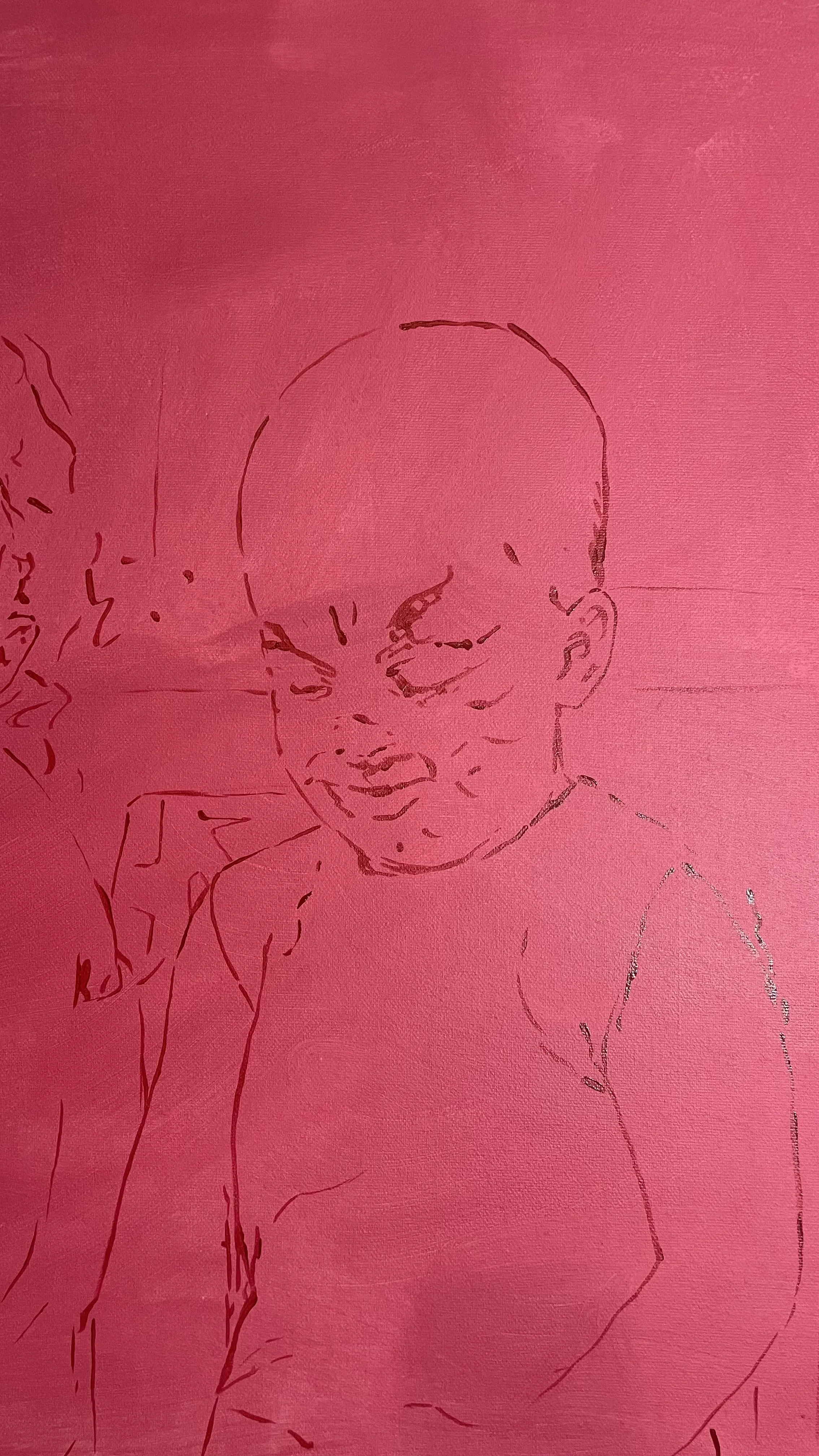
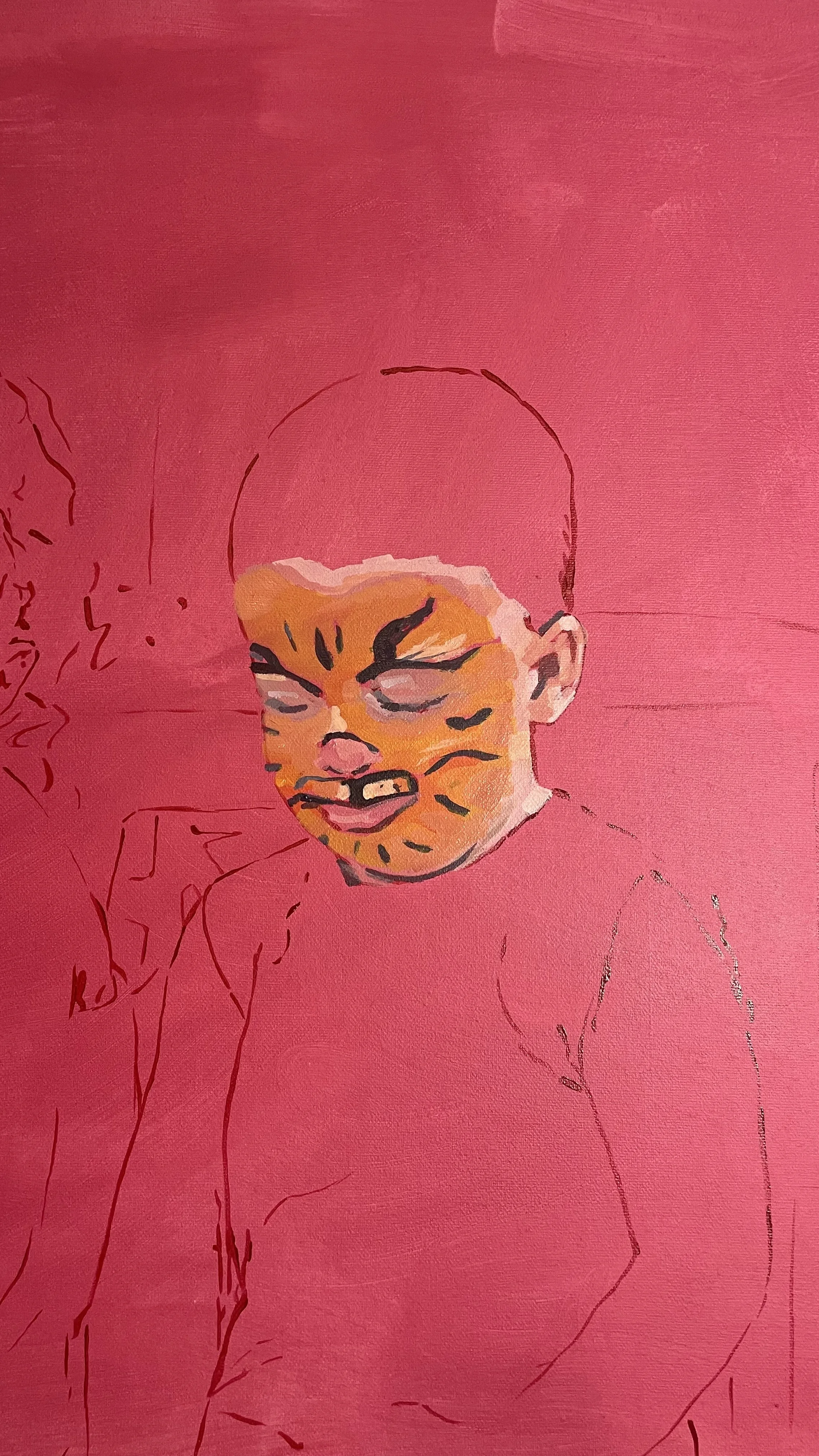
But why pink?
Not only has the pink underpainting become a distinct eye catching and rememberable part of my art with its boldness (or at least I hope so).
Pink for me, adds an obnoxious girliness, to the paintings. It adds to the childhood nostalgia and notion of girlhood found across my whole artistic practice. Bright colours, for me particularly pinks, yellows and blues are associated with memories of childhood and are found from toys and crayons to cartoons on the tv, so I find that the pink underpainting enhances these childhood scenes in a conscious and unconscious sense.
Nostalgia is a hard concept to capture, because different things evoke that nostalgic feeling for everyone, because of course we are all unique and interesting in our own right. All build of different memories and connect to different things throughout our life. But I do find my underpaintings is a very dreamlike shade of pink, quite surreal, and helps see the subject matter in a new light which hopefully helps people to connect with the somewhat dream state I’ve (attempted) to capture with a contrast to the soft and muted tones often associated with the past.
And finally, the symbolism behind magenta.
Magenta: associated with balance, harmony (finding equilibrium between opposing forces) and universal love. Combines the energy of red, and tranquillity of blue. Culturally it can represent a spirit of personal growth. It’s often associated with artistic expression